Rust solo survival works best when you turn one OP monument into a fortress and farm the neighbours' raids
You can order the same kind of articles for your own video to boost it on YouTube and Google. Just message the Telegram bot @sat_sit_bot. Articles with your video embedded are written and posted by the bot itself — on popular topical sites (no ads). Try it free: 50 articles on us.
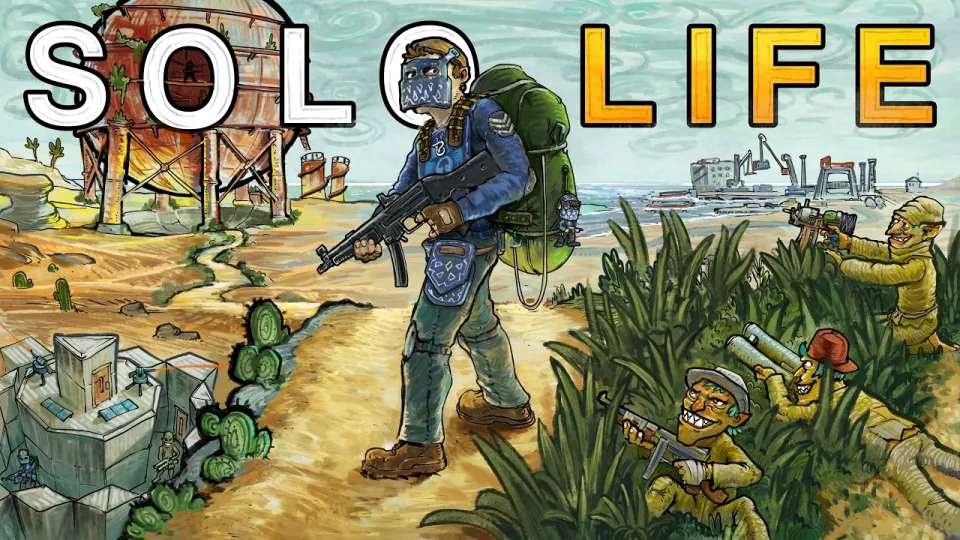
Rust solo survival works when one player turns a single high-value monument into a defended base, farms it on a loop and lets angry neighbours waste their wipe trying to break in. That is the core idea behind Blooprint's solo-life format, and the latest entry shows how a lone player holds an OP monument while several groups push back — the same loop any solo can copy. If you want to try the sponsored game from the video first, grab the War Thunder bonus and free registration through the creator's link.
What "solo life" actually means in Rust
Solo life in Rust is a playstyle, not a server setting: one player, no team voice, no shared loot, and every decision — base spot, monument timing, raid target — made alone. Blooprint's series has run for sixteen entries, and the returning theme is that a solo survives by choosing fights and locations instead of winning raw aim duels. The tension is structural: a group can lose three players and keep farming, while a solo who dies on a monument run loses the kit, the loot and the walk back.
The format also explains the audience reaction. Viewers keep pointing out that solo content feels calmer than group content despite the same chaos, because every risk is legible — you can see exactly what one player owns and what they stand to lose.
Holding an OP monument as a one-man crew
Holding a monument solo means controlling the loot cycle around one strong radtown rather than contesting the whole map. The practical version looks like this:
- Pick a monument with a reliable loot path and at least two exits, so you are never funnelled into one doorway.
- Build a small base within a short run of it — close enough to hear fights, far enough that raiders must commit.
- Farm the monument on a timer, not on impulse: hit it when the server population dips, bank the loot, then reset.
- Keep a cheap secondary kit stashed outside the main base so one death does not end your wipe.
- Treat every counter-raid as information — who pushed, from where, with what — and rebuild toward that threat.
A monument like the Dome rewards vertical movement and sightlines, which is why solo players favour it: you can hear a group coming up the pipes before you see them, and you can drop out of a fight you cannot win. Cargo and parachute drops work the same way, giving a solo a short window of uncontested loot while larger groups are busy elsewhere.
Starter bases, cheap kits and the first hour
A solo wipe is decided in the first hour, and the winning move is a fast, ugly starter base rather than a slow, perfect one. The pattern experienced players use: gather enough for a tool cupboard, a small footprint and two doors, then upgrade outward as loot comes in. Recognisable starter designs — the kind viewers notice immediately when a creator places one — exist because they solve a specific problem: they are cheap to replace, awkward to raid and quick to expand.
Cheap kits matter just as much. A solo who brings a primitive weapon and a handful of meds to a fight loses nothing important and can still punish a group that over-commits. The famous one-tap plays with low-tier weapons are not luck; they come from taking fights where the opponent has more to lose than you do.
Defending an online raid when you are alone
Online raid defense as a solo is a resource management problem before it is a shooting problem. Groups raid when they have numbers, so the defender's job is to make the fight long, loud and expensive:
- Use doors and corners to force one attacker at a time into your sightline.
- Keep a repair stash and a spare weapon inside the core, not in the room you are fighting from.
- Let third parties do work — a raid draws attention, and a passing group will often hit the raiders' own base.
- Prioritise destroying their explosive-carrying player over chasing kills; every rocket they drop is time you buy.
- Accept losing the outer shell and defend the loot room, not the entrance.
Viewers regularly note that raiders burn ten or twenty minutes on a single solo base while their own wipe stalls — that trade is the whole point. A solo who survives an online raid often comes out ahead even after losing walls, because the attackers spent more than the base was worth.
Neighbours, alliances and the social side of solo Rust
Solo Rust is still a social game, and a good neighbour can be worth more than a chest of guns. The pattern that shows up repeatedly in the format: a nearby player who trades, warns about raids or joins a defense for a share of the loot changes the outcome of a wipe far more than one extra automatic weapon. Equally, a hostile neighbour turns every farm run into a coin flip.
Practical rules for neighbour relations:
- Trade small and often — components for food, sulphur for scrap — so both sides stay useful.
- Never show your full base; invite people to a front room only.
- Warn before you raid someone nearby, or expect the whole grid to show up.
- When a group raids you, a friendly neighbour is the cheapest reinforcement you will ever get.
Common questions solo players keep asking
Most doubts around solo Rust come down to time and risk. Is holding a monument alone actually viable? Yes, if you farm it on a schedule and never contest it while a group is already inside. Is a duo better? Many viewers push for it, but the format's appeal is precisely that one player's decisions are visible and accountable. How do you deal with the dark? Night fights favour whoever prepared — night vision, flares or simply not travelling — and even then visibility is a running joke in the community. And how do you avoid burning out against groups? By measuring success in loot banked and raids survived, not in kills.
Useful links
- War Thunder free bonus — PC and consoles
- War Thunder mobile bonus
- Blooprint on Twitch
- Blooprint on Kick
- Blooprint on TikTok
Final takeaway
Solo Rust is a discipline of narrow commitments: one monument, one cheap base, one kit at risk at a time. The sixteenth entry in the solo-life series makes the case that a lone player who controls a strong monument and defends it patiently can outlast groups that spread themselves thin. The channel Blooprint built this format around exactly that idea, and the returning audience suggests it still holds. If you want to support the creator's work, the War Thunder sign-up link is the one he puts in every description. Start with a fast starter, farm on a timer, and let the neighbours spend their wipe on your walls.
Key takeaways
- Solo Rust rewards holding a single high-value monument instead of spreading thin across the map.
- A cheap starter base built fast beats a perfect base built late when neighbours are already farming.
- Online raid defense as a solo means using doors, peeks and third parties rather than open fights.
- Parachute drops and cargo runs give solos loot windows that big clans often ignore.
- Friendly neighbours can decide a wipe more than extra guns or extra walls.
Source: Rust - THE SOLO LIFE V16 · Markdown version
Questions & answers
Can you realistically hold a monument alone in Rust?
Yes, if you treat it as a schedule rather than a fight. Farm the monument when traffic is low, bank loot immediately and avoid contesting it while a group is already inside. A base close enough to return quickly but awkward to raid makes the loop sustainable.
How do you survive an online raid as a solo player?
Make the raid expensive and slow. Fight from doors and corners, keep repair materials and a spare weapon in the core, and target the attacker carrying explosives. Third parties often hit the raiders' base while they are busy with yours.
Is it worth building a cheap starter base instead of waiting for a better one?
Almost always. A small base with a tool cupboard and two doors placed in the first hour protects your progress, and it can be expanded as loot comes in. Waiting for a perfect design usually means losing everything before it is finished.
Why do solo Rust videos feel calmer than group gameplay?
Because the stakes are legible. One player owns one base and one kit, so every risk is visible and every loss is understandable. Groups generate chaos without clear consequences, which reads as noise rather than tension.